
Table of Contents
What Is AHCC?
If you’ve been exploring natural supplements for immune health, chances are you’ve stumbled across the term AHCC. But what is AHCC, exactly — and does it actually live up to the hype surrounding it?
AHCC stands for Active Hexose Correlated Compound. It’s a proprietary mushroom extract derived primarily from the mycelia (root-like filaments) of Lentinula edodes, better known as the shiitake mushroom. Developed in Japan in the late 1980s by researchers at Amino Up Chemical Co. in collaboration with the University of Tokyo, AHCC is now one of the most studied natural immune-support compounds in the world.
What makes AHCC different from standard shiitake supplements or generic mushroom extracts is its unique fermentation process. The mycelia are cultivated in rice bran extract and fermented in liquid culture for several weeks. This process breaks down the complex polysaccharides (long-chain sugars) found in shiitake into shorter, more bioavailable molecules — primarily alpha-glucans rather than the beta-glucans you’d find in most other mushroom supplements.
This distinction matters more than it might seem on the surface, and we’ll come back to it when we get into the research.
Today, AHCC is used in more than 1,000 clinics and hospitals across Japan and is sold as a dietary supplement worldwide under brand names like Kinoko Gold and ImmPower. It’s one of the most popular complementary medicine supplements in Japan — a country with some of the most rigorous standards for natural health products.
How Does AHCC Work?
To understand how AHCC works, you need a quick crash course in immunology — don’t worry, we’ll keep it simple.
Your immune system has two main arms:
- Innate immunity — your body’s fast, non-specific first response to threats (bacteria, viruses, abnormal cells)
- Adaptive immunity — the slower, targeted response that creates specific antibodies and immune memory
Most immune supplements focus on one or the other. AHCC appears to support both.
Specifically, research suggests AHCC influences several types of immune cells:
- Natural killer (NK) cells — frontline cells that identify and destroy virally infected cells and cancer cells without needing prior “instructions”
- Dendritic cells — sentinels that detect threats and alert the adaptive immune system
- Macrophages — large cells that engulf and digest pathogens and cellular debris
- T-cells — key players in the adaptive response that destroy infected cells and help orchestrate the immune reaction
- Cytokine production — chemical messengers that coordinate immune activity across different cell types
The primary active molecules in AHCC are partially acetylated alpha-1,4 glucans — a mouthful, but the key point is that their small molecular weight (about 5,000 daltons, versus 100,000+ daltons for typical beta-glucans) means they’re more readily absorbed in the gut and more likely to interact with immune receptors in the intestinal lining.
Think of it like this: your gut is home to roughly 70% of your immune system. Compounds that can effectively interact with gut-associated lymphoid tissue (GALT) have a disproportionately powerful influence on systemic immune function. AHCC’s alpha-glucans appear to be particularly good at doing exactly that.
The Key Ingredient: Shiitake Mycelia
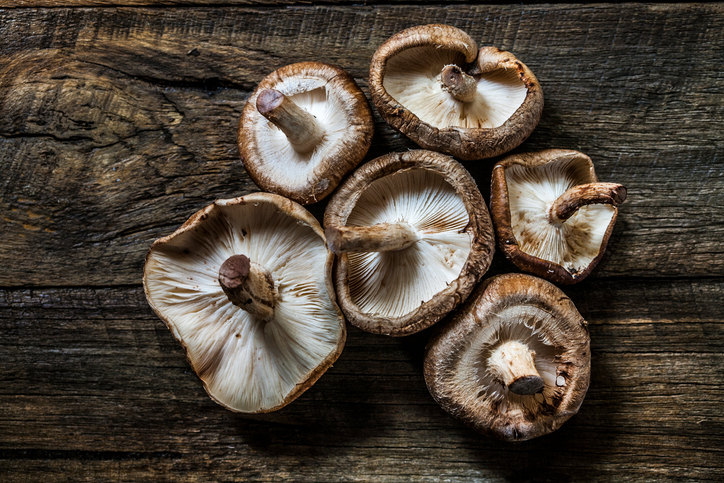
Most people are familiar with shiitake mushrooms as a food — earthy, savory, delicious in stir-fries and soups. But AHCC isn’t made from the mushroom cap you’d find at the grocery store. It’s made from the mycelia, which is the underground fungal network — essentially the “root system” of the mushroom.
This distinction is important for a couple of reasons:
- Mycelial compounds are different from fruiting body compounds. The fruiting body (the cap and stem) and the mycelia contain different concentrations of bioactive molecules. Mycelial extracts tend to be richer in certain immunomodulatory compounds, particularly polysaccharides.
- The fermentation process creates unique bioactive compounds. AHCC isn’t simply a shiitake mycelium powder. The fermentation step modifies the polysaccharide structure, creating the characteristic alpha-glucans that distinguish AHCC from all other mushroom-based supplements.
Shiitake has a long history in traditional East Asian medicine — it’s been used for centuries in China and Japan as a tonic for health and longevity. Modern science has since identified the mechanisms behind some of these traditional uses, including the presence of lentinan (a beta-1,3/1,6-glucan) in shiitake fruiting bodies, which has been approved as a prescription drug in Japan for cancer treatment.
AHCC builds on this legacy but offers a distinct biochemical profile. If you’re comparing AHCC to other medicinal mushrooms like reishi, turkey tail, or lion’s mane, it’s worth noting that each contains a different set of active compounds. AHCC is uniquely characterized by its acetylated alpha-glucans and the specific fermentation-derived compounds produced during manufacture.
AHCC and Immune System Support
The headline claim for AHCC is immune support — but what does that actually mean in practice?
“Immune support” is one of the most overused phrases in the supplement industry. Almost everything from vitamin C gummies to elderberry syrup carries that label. But the research behind AHCC is, frankly, more substantial than what you’ll find behind most immune supplements on the market.
Here’s what the existing literature suggests AHCC may help with:
Modulating Immune Response in Healthy Adults
Several studies have examined AHCC’s effects on healthy individuals — not just people who are sick. A study published in Nutrition Journal found that AHCC supplementation significantly increased NK cell activity and maintained cytokine balance in healthy adults during stressful periods like flu season. [→ PubMed reference: Immune modulation by AHCC in healthy subjects]
This is relevant because immune support isn’t just about fighting illness — it’s also about maintaining immune vigilance during periods of stress, sleep deprivation, or intense physical training, all of which can suppress immune function.
Supporting Immune Function in Cancer Patients
Some of the most compelling AHCC research comes from oncology settings. Because many cancer treatments (chemotherapy, radiation) suppress immune function, researchers have explored AHCC as a complementary therapy.
A 2013 study at the University of Texas MD Anderson Cancer Center explored AHCC’s effects on liver cancer patients. Results suggested that daily AHCC supplementation was associated with improved markers of immune function and quality of life — though the researchers noted the need for larger randomized controlled trials. [→ University of Texas MD Anderson Cancer Center, published in Nutrition and Cancer]
Several Japanese clinical studies have examined AHCC use alongside chemotherapy, with some showing improvements in NK cell activity and reduced severity of certain side effects. It’s important to note that AHCC is not a cancer treatment — but supporting immune health during treatment is a legitimate clinical goal.
Responses to Viral Infections
Perhaps the most frequently cited research involves AHCC’s effects on viral infections — particularly influenza and HPV. We’ll cover the HPV research in its own section, but it’s worth noting that AHCC appears to influence interferon signaling, which is central to antiviral immune defense.
One of the more interesting findings from animal studies is that AHCC appears to enhance the production of interferons — proteins that essentially sound the alarm and coordinate antiviral defenses across multiple cell types. [→ NIH PubMed: AHCC and interferon production]
What Does the Research Say?
Let’s be honest about where AHCC research stands. There’s more high-quality evidence behind AHCC than behind most natural supplements — but it’s also not a slam-dunk body of evidence. Here’s a fair summary:
What’s Well-Supported
- NK cell activity enhancement: Multiple human studies have shown that AHCC supplementation increases NK cell activity. This is one of the most consistently replicated findings. NK cells are your body’s fast-response units against infected and cancerous cells.
- Safety profile: Across dozens of clinical trials and decades of use in Japan, AHCC has shown a consistently excellent safety profile. Adverse events are rare and generally mild (mostly GI-related).
- Bioavailability: Unlike many mushroom extracts, AHCC’s small-molecule alpha-glucans are absorbed in the gut and appear in measurable concentrations in blood, which is a prerequisite for any systemic effect.
What’s Promising but Needs More Evidence
- Cancer adjunct therapy: The oncology research is promising but limited by small sample sizes and lack of randomized controlled trials. Larger, well-designed RCTs are needed.
- Antiviral effects in humans: The animal data on viral infections is compelling, and the HPV research is intriguing (more on that below), but we need more human trials before drawing firm conclusions.
- Long-term immune modulation: Most studies run 4–12 weeks. We don’t have great long-term data on what happens with sustained use over 1–2+ years.
The Scientific Bottom Line
The National Institutes of Health’s National Center for Complementary and Integrative Health (NCCIH) maintains a nuanced position on mushroom-based supplements: the evidence is growing, but isn’t yet sufficient to make definitive clinical recommendations for most applications. That said, AHCC is probably among the best-studied functional mushroom extracts available today. [→ NIH NCCIH: Mushrooms and Health]
AHCC and HPV: A Closer Look
One of the most widely searched questions related to AHCC is its potential role in clearing HPV infections — and for good reason.
Human papillomavirus (HPV) is the most common sexually transmitted infection in the world. Most HPV infections clear on their own, but persistent high-risk strains can lead to cervical cancer and other HPV-related cancers. There is currently no antiviral treatment for HPV — the standard approach is watchful waiting and regular Pap/HPV testing.
Against this backdrop, the preliminary research on AHCC and HPV has attracted significant attention.
A pilot study by Dr. Judith Smith at the University of Texas Health Science Center at Houston found that oral AHCC supplementation (3g daily) for 6 months was associated with clearance of persistent HPV infections in a small cohort of women. The results were striking enough that Dr. Smith’s team proceeded to a Phase II clinical trial. [→ Dr. Judith Smith, UTHealth, published in Gynecologic Oncology]
A follow-up peer-reviewed study published in Frontiers in Oncology (2022) reported that patients receiving AHCC had significantly higher HPV clearance rates compared to placebo — 58% versus 0% in the placebo group over a 6-month period. The proposed mechanism involves AHCC’s ability to enhance interferon signaling and innate immune surveillance.
Important caveats: These are small preliminary trials. The sample sizes were not large enough to draw definitive conclusions, and the research is not yet sufficient for AHCC to be recommended as a standard treatment for HPV. However, the consistency of findings across multiple studies has prompted further investigation.
If you have HPV and are considering AHCC, have that conversation with your gynecologist or healthcare provider — this is a promising area, but medical supervision matters.
Who Might Benefit from AHCC?
Based on the existing research, AHCC may be worth considering for:
- People with compromised immune function — whether from chronic stress, poor sleep, aging, or post-illness recovery
- Older adults — immune function naturally declines with age (a process called immunosenescence), and maintaining NK cell activity becomes more important
- People undergoing cancer treatment — as a complementary support (always with oncologist approval)
- Individuals with persistent HPV — based on preliminary clinical evidence, with physician guidance
- People looking for immune maintenance during high-risk periods — flu season, high travel frequency, or sustained physical and psychological stress
AHCC is not a replacement for standard medical care, vaccines, or established treatments. It’s a supportive supplement with a meaningful evidence base — and that framing matters.
How to Take AHCC: Dosage and Forms
AHCC is available in capsule, powder, and liquid forms. The most common commercial forms are capsules.
Typical dosages used in research:
- Maintenance/general immune support: 1–3g per day
- Higher therapeutic doses (clinical studies): 3–6g per day, often used for HPV or cancer adjunct research
Timing matters: Most clinical protocols use AHCC on an empty stomach, taken at least 30 minutes before eating. Some research suggests that food — particularly fats and proteins — may interfere with AHCC absorption.
Duration: Most positive results in studies were seen after 4–8 weeks of consistent use. AHCC is not a fast-acting supplement — consistency over weeks is more important than the exact daily dose.
Safety and Side Effects
AHCC has a strong safety profile based on several decades of clinical use in Japan and multiple human trials. It’s generally well-tolerated, and serious adverse events are rare.
The most commonly reported side effects are mild and GI-related:
- Bloating or gas (especially at higher doses)
- Nausea (more common when taken with food)
- Loose stools
Drug interactions to be aware of:
- AHCC may interact with certain chemotherapy agents — specifically, some research suggests it could potentially affect the metabolism of tamoxifen. Always consult your oncologist before using AHCC during cancer treatment.
- As an immune modulator, AHCC could theoretically interact with immunosuppressant medications used in organ transplant patients or autoimmune conditions.
Who should avoid AHCC:
- Pregnant or breastfeeding women (insufficient safety data)
- People on immunosuppressant therapy (without physician approval)
- People with mushroom allergies
The FDA classifies AHCC as Generally Recognized as Safe (GRAS), though as with all dietary supplements, it is not subject to the same pre-market approval process as pharmaceutical drugs.
How to Choose a Quality AHCC Supplement
Not all AHCC products are created equal. Here’s what to look for:
1. Verify it contains actual AHCC Some products label themselves as “shiitake extract” or use similar branding without containing the authentic AHCC compound. Look for products that explicitly state “AHCC” and ideally cite the Amino Up Co. source material.
2. Check the alpha-glucan content AHCC products should ideally list the alpha-glucan content. This is the primary marker of AHCC quality. If a product only lists “polysaccharide content” without specifying the type, that’s a red flag.
3. Look for third-party testing Choose brands that provide a Certificate of Analysis (COA) from an independent testing laboratory verifying purity, potency, and absence of contaminants. Organizations like NSF International, USP, or Informed Sport certification are reliable markers.
4. Watch out for fillers Some lower-quality AHCC products bulk up their capsules with fillers. The fewer unnecessary additives, the better.
5. Dose per capsule Capsule sizes vary significantly. A 500mg capsule requires 6 capsules per day to reach a 3g therapeutic dose. Make sure you’re actually getting a meaningful amount per serving.
Frequently Asked Questions
What is AHCC and what does it stand for?
AHCC stands for Active Hexose Correlated Compound. It’s a proprietary extract made from the mycelia of shiitake mushrooms (Lentinula edodes) through a fermentation process. It’s one of the most studied natural immune support supplements in the world, particularly popular in Japan.
How is AHCC different from other mushroom supplements?
Unlike most mushroom supplements that contain beta-glucans, AHCC is rich in alpha-glucans — specifically partially acetylated alpha-1,4 glucans. These shorter-chain compounds have a lower molecular weight, which makes them more bioavailable. AHCC also undergoes a proprietary fermentation process that creates its unique biochemical profile.
Can AHCC really help with HPV?
Preliminary clinical trials — including a Phase II study by Dr. Judith Smith at UTHealth Houston — have shown promising results, with significantly higher HPV clearance rates in AHCC groups compared to placebo. However, sample sizes were small and AHCC is not currently an approved HPV treatment. Speak with your healthcare provider before using it for this purpose.
How long does it take for AHCC to work?
Most studies showing positive effects used AHCC for 4–8 weeks. The HPV research used 6-month protocols. AHCC is not a fast-acting supplement — consistent use over weeks to months is required to see measurable immune changes.
Is AHCC safe to take every day?
Based on available research, AHCC appears safe for long-term daily use at standard doses (1–3g/day) for most healthy adults. However, people taking immunosuppressants, undergoing cancer treatment, or who are pregnant should consult a doctor first.
Does AHCC interact with any medications?
There is some evidence that AHCC may affect the metabolism of certain drugs, particularly tamoxifen (used in breast cancer treatment). If you’re taking any prescription medications — especially chemotherapy agents — consult your healthcare provider before starting AHCC.
Can I take AHCC during chemotherapy?
AHCC has been used as a complementary therapy in Japanese cancer clinics for decades. Some research suggests it may help maintain immune function during chemotherapy. However, it can also potentially interact with certain chemo agents. This decision absolutely requires discussion with your oncologist.
What is the best time of day to take AHCC?
Most clinical protocols recommend taking AHCC on an empty stomach — typically 30–60 minutes before a meal. Some researchers suggest the morning is preferable, but consistency matters more than timing.
Final Thoughts
So, what is AHCC? In short: it’s one of the most rigorously studied natural immune support supplements available today — not a magic bullet, but a genuinely interesting compound with a meaningful evidence base behind it.
The core of the science is solid: AHCC appears to enhance natural killer cell activity, support multiple arms of immune function, and do so safely for most people. The HPV research is preliminary but compelling enough to warrant continued investigation. And decades of use in Japanese clinical settings provide a reassuring real-world safety record.
That said, AHCC is a supplement — not a drug. It works best as part of a broader approach to immune health that includes quality sleep, a nutrient-dense diet, regular physical activity, stress management, and appropriate preventive care like vaccinations and regular check-ups.
If you’re considering AHCC, talk to a healthcare provider who’s familiar with integrative medicine. Bring the research, know your dosage goals, and manage expectations accordingly. Supplements that work do so gradually and subtly — not dramatically. AHCC fits that description.
