What Is AHCC? A Complete Guide for HPV Support, Immune Health, and What the Research Actually Says
Posted in :

Table of Contents
- What Is AHCC?
- Where Does AHCC Come From?
- How Does AHCC Work in the Body?
- AHCC and HPV: What Does the Research Say?
- AHCC and Cervical Dysplasia
- Who Might Benefit From AHCC?
- How to Take AHCC: Dosage and Timing
- Is AHCC Safe? Side Effects to Know
- How to Choose a Quality AHCC Supplement
- AHCC vs. Other Immune Supplements
- Frequently Asked Questions
- The Bottom Line
What Is AHCC? {#what-is-ahcc}
If you’ve recently received an HPV diagnosis and started searching for ways to support your immune system, you’ve probably come across the name AHCC. Maybe a friend mentioned it. Maybe you found it in a forum thread full of women sharing their experiences. And now you’re wondering: what actually is this thing, and is it worth trying?
That’s a completely fair question — and you deserve a straight answer, not a sales pitch.
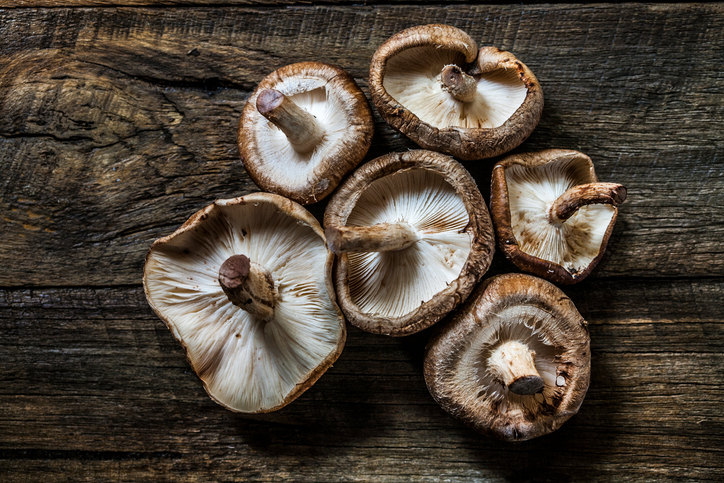
AHCC stands for Active Hexose Correlated Compound. It’s a proprietary, standardized extract made from the mycelia (the root-like structures) of shiitake mushrooms. It’s classified as a functional food ingredient in Japan, where it was first developed in the late 1980s, and it’s been studied primarily for its effects on immune function.
In plain terms: AHCC is a supplement derived from a specific part of shiitake mushrooms, processed in a way that concentrates certain carbohydrate compounds believed to support how your immune system responds to threats — including viruses like HPV.
It is not a drug. It does not treat or cure HPV. But there is a growing body of clinical research suggesting it may help the immune system clear persistent high-risk HPV infections more effectively — and that research is worth understanding carefully.
Where Does AHCC Come From? {#where-does-ahcc-come-from}
AHCC is made from the mycelia of Lentinula edodes — the scientific name for shiitake mushrooms. Most people know shiitake as a culinary ingredient, but in traditional East Asian medicine, these mushrooms have been used for centuries as a form of immune and wellness support.
The compound itself was developed by a Japanese company called Amino Up Chemical Co., Ltd. in collaboration with the University of Tokyo. The manufacturing process is specific and patented: the mycelia are cultured in a liquid medium, then the extract undergoes a long fermentation process — typically 45 to 60 days — before it’s freeze-dried into a powder.
What makes AHCC distinctive from a plain shiitake extract is its alpha-glucan content. Most medicinal mushroom supplements are high in beta-glucans, which are well-studied immune modulators. AHCC, by contrast, is rich in partially acetylated alpha-1,4-glucans — shorter-chain polysaccharides that appear to be more bioavailable (meaning your body may absorb and use them more readily).
This distinction matters because the immune activity researchers observe with AHCC is linked specifically to these alpha-glucan compounds, not to shiitake mushrooms in general.
How Does AHCC Work in the Body? {#how-does-ahcc-work}
Understanding how AHCC affects immunity requires a quick look at how your immune system actually fights viruses.
Your immune system has two main branches: innate immunity (your fast, general first-response system) and adaptive immunity (the targeted, memory-based system that learns to recognize specific pathogens). Both need to work well for your body to clear a virus like HPV.
Research suggests AHCC supports immune function through several mechanisms:
1. Increasing Natural Killer (NK) Cell Activity
NK cells are frontline immune cells that identify and destroy infected or abnormal cells without needing prior exposure to a specific virus. Studies have shown AHCC can increase both the number and activity of NK cells.
2. Boosting Dendritic Cell Function
Dendritic cells act like messengers between your innate and adaptive immune systems. They identify threats and train your T-cells to respond. AHCC appears to enhance dendritic cell maturation, which helps coordinate a more effective immune response.
3. Supporting T-Cell and Cytokine Activity
AHCC has been shown in research to modulate levels of cytokines — the chemical signals that help immune cells communicate. This includes supporting CD4+ T-helper cells and maintaining healthy inflammatory signaling.
4. Protecting Immune Function During Stress
Some research has looked at AHCC in cancer patients undergoing chemotherapy, where it appears to help maintain white blood cell counts. This hints at a broader role in protecting immune resilience under physiological stress.
None of this means AHCC directly “kills” HPV. What it appears to do is support the conditions your immune system needs to do that job itself.
AHCC and HPV: What Does the Research Say? {#ahcc-and-hpv}
This is probably the main reason you’re reading this article. So let’s get into the research honestly — including what it shows and what it doesn’t.
The Pilot Study That Started the Conversation
The most cited research on AHCC and HPV comes from Dr. Judith Smith at the University of Texas Health Science Center at Houston. Her work began with a small but significant pilot study published in 2014. In that study, 10 women with persistent high-risk HPV infections took AHCC orally for up to six months. By the end of the study, five of the ten women (50%) had confirmed negative HPV tests — meaning the virus was no longer detectable. Three of those five maintained negative status after stopping AHCC.
This was a small study. It wasn’t randomized or placebo-controlled, which are limitations worth acknowledging. But it was enough to justify more rigorous investigation.
The Phase II Clinical Trial
Dr. Smith followed her pilot work with a larger, randomized, double-blind, placebo-controlled clinical trial — the gold standard in medical research. Results from this trial, which enrolled women with confirmed persistent high-risk HPV infections, showed that women taking AHCC were significantly more likely to clear HPV than those taking a placebo.
The dosing protocol used in the clinical trial was 3 grams of AHCC taken once daily on an empty stomach.
It’s important to note: this research is still emerging. We don’t yet have large-scale, multi-site trials with thousands of participants. But the signal is consistent, and the safety profile is reassuring. Researchers and integrative medicine practitioners have taken note.
What “HPV Clearance” Actually Means
When researchers talk about HPV clearance, they mean the virus becomes undetectable on a standard PCR test. This doesn’t necessarily mean the virus is eliminated from your body entirely — HPV can lie dormant. What it does mean is that your immune system has suppressed the virus below detectable levels, which is the same outcome that happens in most people who naturally clear HPV on their own.
Your immune system clears most HPV infections within 1–2 years without any intervention. AHCC research suggests it may support that process — particularly in cases of persistent infection, where the virus hasn’t cleared on its own timeline.
AHCC and Cervical Dysplasia {#ahcc-and-cervical-dysplasia}
Cervical dysplasia — abnormal cell changes detected on a Pap smear or colposcopy — is often caused by persistent high-risk HPV strains, particularly HPV 16 and HPV 18. Dysplasia exists on a spectrum: CIN 1 (mild), CIN 2 (moderate), and CIN 3 (severe), with more severe cases carrying a higher risk of progression to cervical cancer if untreated.
Many women with low-grade dysplasia are placed on a “watch and wait” protocol, meaning their doctor monitors them with repeat Pap smears or HPV tests every 6–12 months rather than intervening immediately. This watchful waiting makes sense clinically because mild dysplasia often resolves on its own. But it can also be an emotionally difficult limbo to sit in.
Some integrative practitioners suggest AHCC as part of a supportive approach during this monitoring period, alongside lifestyle changes like quitting smoking, optimizing nutrition (especially folate and vitamin D), and managing stress — all of which affect immune competence.
AHCC is not a treatment for cervical dysplasia, and it should never replace medical follow-up. But as an adjunct strategy to support the immune system while watching and waiting, the emerging research is encouraging enough that many informed patients are discussing it with their doctors.
Who Might Benefit From AHCC? {#who-might-benefit}
AHCC isn’t just for people with HPV. The supplement has been studied across a range of contexts. But HPV-related immune support is currently one of the most clinically relevant applications.
You might consider discussing AHCC with your healthcare provider if you:
- Have received a positive high-risk HPV diagnosis and want to support natural clearance
- Have been diagnosed with low-grade cervical dysplasia (CIN 1) and are in a monitoring phase
- Are interested in immune support beyond standard multivitamins
- Are looking for options that are evidence-informed, not just anecdotal
- Have recurrent HPV after previous clearance and want to strengthen immune vigilance
It may be less relevant — or require a doctor’s guidance — if you are pregnant, immunocompromised, or currently undergoing treatment for another condition.
How to Take AHCC: Dosage and Timing {#how-to-take-ahcc}
This is where a lot of people get confused because products vary widely in concentration and recommendations.
Here’s what the clinical research actually used:
- Dose: 3 grams per day (3,000 mg)
- Timing: Once daily, on an empty stomach — typically 1 hour before eating or 2 hours after a meal
- Duration: A minimum of 3–6 months was used in studies; some protocols extended to 12 months
The empty stomach requirement matters. Research suggests AHCC may be more bioavailable without food present. This is one reason some users don’t see expected results — they’re taking it with breakfast or a meal.
Practical tip: Many people take AHCC first thing in the morning, wait an hour, then eat breakfast. Alternatively, taking it at night before bed (at least 2 hours after dinner) works well for others.
If budget is a concern, some practitioners suggest a maintenance dose of 1 gram per day after initial clearance, though this lower dose hasn’t been studied as rigorously in HPV contexts.
Is AHCC Safe? Side Effects to Know {#is-ahcc-safe}
AHCC has a strong safety record, which is one reason it’s been used so widely in Japan for decades. It’s available over the counter and generally considered well-tolerated.
Reported side effects are rare and mild, and may include:
- Nausea (usually when taken on an empty stomach; often resolves after a few days)
- Bloating or digestive discomfort
- Headache (less common)
- Fatigue (rare)
Most side effects are transient and tend to resolve within the first week or two as your body adjusts.
People who should use caution or consult a doctor first:
- Those who are pregnant or breastfeeding (insufficient safety data)
- People with autoimmune conditions (immune stimulation could theoretically exacerbate symptoms)
- Individuals on immunosuppressant medications
- Anyone with mushroom allergies (though AHCC is processed, it originates from shiitake)
AHCC has no known significant drug interactions, but it’s always reasonable to inform your doctor or pharmacist about any supplements you’re taking.
How to Choose a Quality AHCC Supplement {#how-to-choose}
Not all AHCC products are equal. Because AHCC is a proprietary compound, the most important thing to look for is whether the product uses genuine, licensed AHCC from Amino Up in Japan. Knockoff or generic “shiitake mycelia extract” products may not contain the same compounds or concentrations used in clinical studies.
What to look for on the label:
- The name “AHCC” prominently listed as an ingredient (not just “shiitake mushroom extract”)
- A statement that it is trademarked or licensed AHCC (sometimes noted as “Quality of Life AHCC” or similar)
- Third-party testing for purity and potency
- Clear dosage information in milligrams so you can match clinical research doses
- GMP certification (Good Manufacturing Practices)
A 30-day supply at clinical doses (3g/day) is not cheap — budget $60–$120/month depending on the brand. Be skeptical of very low-priced options, which may indicate inferior sourcing or concentration.
AHCC vs. Other Immune Supplements {#ahcc-vs-others}
People managing HPV often research several immune-support supplements at once. Here’s a brief, honest comparison:
| Supplement | Mechanism | HPV-Specific Research | Notes |
|---|---|---|---|
| AHCC | Alpha-glucans, NK cell support | Yes — human clinical trials | Most studied for HPV specifically |
| Beta-glucans | Immune modulation | Limited for HPV | Well-studied generally |
| Folate/B9 | Cervical cell health | Indirect | Important for cervical tissue |
| Vitamin D | Broad immune regulation | Some association | Very important; get levels tested |
| Zinc | T-cell and antiviral support | General immune data | Commonly deficient |
| Indole-3-Carbinol / DIM | Estrogen metabolism | Some early research | Often combined with AHCC |
AHCC is the most directly studied supplement for HPV clearance specifically. That doesn’t make the others irrelevant — an immune-supportive lifestyle involves multiple factors. But if you’re going to invest in one supplement targeting HPV persistence, AHCC has the strongest evidence base.
Frequently Asked Questions {#faq}
1. Can AHCC cure HPV?
No. AHCC is not a treatment or cure for HPV. No supplement is. What AHCC may do — based on clinical research — is support the immune system’s ability to suppress and potentially clear a high-risk HPV infection. Think of it as supporting your body’s own natural clearance process, not replacing it.
2. How long does it take for AHCC to work for HPV?
Clinical trials used AHCC for a minimum of three to six months before assessing outcomes. HPV testing is typically done at 6-month intervals anyway. Expect to commit to at least 3–6 months before drawing conclusions. Immune support is not a quick fix.
3. Can men use AHCC for HPV?
Yes. While most HPV-related research (including the AHCC studies) has focused on women due to cervical dysplasia risk, HPV affects men too — and the underlying immune mechanisms are the same. Men with high-risk HPV or related conditions can discuss AHCC with their doctor.
4. Should I take AHCC with food or without?
Clinical research used AHCC on an empty stomach — either 1 hour before a meal or at least 2 hours after eating. This appears to improve absorption. If you experience nausea on an empty stomach, a small snack may help, though it may reduce efficacy slightly.
5. Can I take AHCC while getting the HPV vaccine?
The HPV vaccine (like Gardasil 9) prevents future infections from specific HPV strains — it does not treat existing infections. If you already have HPV, the vaccine may still offer protection against strains you haven’t been exposed to. There’s no known interaction between AHCC and the HPV vaccine, but discuss timing with your doctor.
6. Is AHCC the same as a regular shiitake supplement?
No. While AHCC comes from shiitake mycelia, it undergoes a specific, patented fermentation process that produces alpha-glucans not typically found in standard shiitake supplements. A regular shiitake capsule is not a substitute for genuine AHCC.
7. What’s the best AHCC supplement brand?
Several reputable brands use licensed AHCC from the original Japanese manufacturer, including Quality of Life Labs, Maypro (who supplies many private label brands), and others. Look for licensed AHCC with third-party testing. Your doctor or a registered dietitian familiar with supplements can offer personalized guidance.
8. Can I take AHCC if I have an autoimmune condition?
Use caution. Because AHCC supports and modulates immune activity, people with autoimmune conditions (like lupus, rheumatoid arthritis, or multiple sclerosis) should speak with their doctor before starting AHCC. Immune stimulation can, in some cases, affect autoimmune disease activity.
The Bottom Line {#conclusion}
Getting an HPV diagnosis — especially a persistent one — is scary. It’s okay to admit that. The uncertainty of waiting, the fear of what it might mean down the road, the feeling that you want to do something rather than just wait and see — all of that is understandable.
AHCC isn’t a miracle. But it isn’t snake oil either. It’s a well-researched, generally safe, mushroom-derived supplement with a growing body of clinical evidence specifically supporting its role in HPV immune response. The research is still maturing, but it’s credible enough that integrative medicine practitioners and an increasing number of OB-GYNs are familiar with it and open to discussing it.
What AHCC does is support your immune system — the same immune system that clears HPV on its own in most people. If your immune system needs a hand, AHCC may be worth discussing with your doctor as part of a broader supportive approach that also includes optimizing your vitamin D levels, managing stress, avoiding smoking, and keeping up with your Pap smears and follow-up appointments.
It is not a replacement for medical care. It is not a guarantee. But for many women (and men) navigating HPV persistence, it’s a reasonable, evidence-informed option to have in your toolkit.
Always talk to your healthcare provider before starting any new supplement, especially if you have underlying health conditions or are taking other medications.
This article is for informational purposes only and is not a substitute for professional medical advice, diagnosis, or treatment.
Suggested Internal Links
- “HPV and Your Immune System: What You Need to Know” — Links to a foundational article on how the immune system responds to HPV, supporting readers who want deeper context before diving into supplements.
- “Natural Ways to Support Immune Health During HPV Watch-and-Wait” — Links to a broader lifestyle guide covering nutrition, stress management, sleep, and supplementation for HPV support.
- “Cervical Dysplasia Explained: CIN 1, CIN 2, and CIN 3” — Targets readers who found this AHCC article after a dysplasia diagnosis; helps them understand their diagnosis before exploring supplement options.
- “Best Supplements for HPV: A Research-Based Overview” — A comparison article covering AHCC, DIM, folate, vitamin D, and zinc, allowing readers to see AHCC in context.
- “What to Expect at Your HPV Follow-Up Appointment” — Practical guide to Pap smears, colposcopy, and HPV testing timelines; meets readers at the clinical care touchpoint where AHCC questions often arise.
